What is a logo? Definition, types and functions
Author: Matthias Wimmer · Published: January 16, 2023 · Updated: November 1, 2025
A logo is a brand’s central visual symbol and makes a company instantly recognizable.
This article explains the definition of a logo, the most common types of logos, and their key functions in brand identity and recognition. This provides a solid foundation if you’re planning a new logo or want to evaluate an existing one.
Logos have a long history as symbols that represent companies, organizations, or specific products and services. They are a powerful tool for visual communication that can be designed in a variety of ways.
Contents

Definition: logos simply explained
A logo is a graphic symbol, text, or a combination of both. It represents a company, an organization, a brand, a person, or a product. It embodies the brand’s entire visual identity and makes it recognizable at a glance.
Important: A good logo is distinctive. It’s easy to remember. It works in every situation, whether on a business card, in an app, at a trade show booth, or on social media.
What a Logo Is Not
A logo isn’t a random creation or a pretty gimmick. It isn’t a quick graphic that you just pull from a template library. It’s an important tool for businesses. It helps them strengthen their brand and build trust.
Logo, signet, brand, corporate identity?
Logo: A graphic or typographic symbol that represents the brand or company.
Signet: The graphic element of the logo, often a symbol without text.
Brand: The overall image of a company or product. It encompasses not only the logo, but also values, promises, and the customer experience.
Claim: A short, concise phrase accompanying the logo that succinctly captures the brand promise or corporate philosophy. It is often permanently associated with the logo.
Slogan: A catchy advertising message typically used in connection with a specific campaign. A slogan is more flexible and, unlike a claim, is changed more frequently.
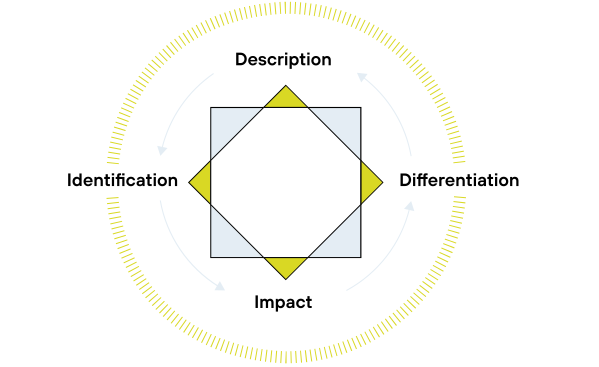
Brand Identity: Brand Identity is a company’s vidual design system. It includes the logo, colors, typography, and other design elements.
Corporate Identity (CI): The identity (in the sense of personality) of the company. It encompasses the company’s values, self-image, and communication.
What types of logos are there?
There are various types of logos. A logo typically consists of a wordmark or a combination of a wordmark and a figurative mark.
1. Logotype: The logo consists of lettering.
2. Signet/symbol: The logo is a graphic symbol.
3. Wordmark/figurative mark: A combination of an image and lettering.
Examples of different types of logos
Word marks (company logos)
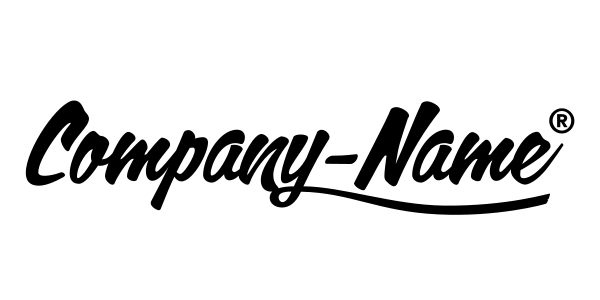
Here, the company name or a product name is presented typographically.
Examples: Visa, Coca-Cola
Advantages:
- Memorable, especially for short, distinctive names
- Immediately understandable, since it’s easy to read
Disadvantages:
- Less flexible than an icon or favicon
- Doesn’t work well if the name is too long or complicated
Figurative marks (logo symbols)
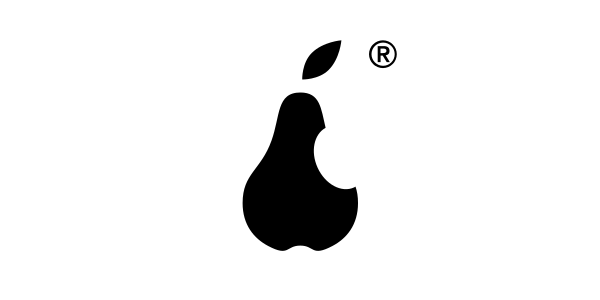
Minimal, memorable graphic forms make up the main component of the logo. These symbols alone represent the entire brand.
Examples: Apple, Twitter
Advantages:
- Very versatile (e.g., as an app icon or social media profile)
- Often particularly memorable and universally understood
Disadvantages:
- Difficult to remember without accompanying text at the beginning
- Risk of confusion if the design is too abstract
Figurative marks/logos can be further classified according to the following criteria:
Illustrative figurative marks
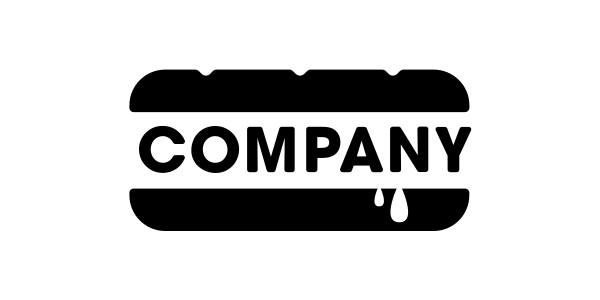
Here, the design elements or graphic symbols can be clearly associated with a specific offering. They symbolically represent certain products or services.
Examples: Burger King, Tchibo
Advantages:
- You can highlight the company’s activities
Abstract figurative marks
The logo’s shape does not directly indicate what the brand offers. This type of logo works well when the product or service is difficult to represent because it cannot be touched or seen. Even if the product or service range is very broad and cannot be easily represented by a single shape, this type of logo is a good fit.
Examples: LEGO, Nestlé
Word and design mark
This widely used variation consists of a word mark (lettering) and a graphic symbol that is more or less abstract.
Examples: Lacoste, Puma
Advantages:
- Combines the advantages of text and imagery
- Particularly versatile and flexible; for example, the icon can be used on its own as a favicon
Disadvantages:
- Slightly more complex in design
- If the design is too complex, brand recognition may suffer
Lettermarks (or monogram logos)
Logos consisting of individual letters, often abbreviations.
Examples: IBM, BBC, HBO
Advantages:
- Ideal for companies with long or difficult names
- Can be very concise and distinctive
Disadvantages:
- Less self-explanatory; requires communication until it becomes widely known
Mascot
Mascots are illustrative, often highly stylized depictions of characters (people, animals, etc.).
Examples: KFC, Haribo (bear)
Advantages:
- Very emotional, creates a sense of closeness and personality
- Particularly well-suited for family or children’s products
Disadvantages:
- May come across as unprofessional in the B2B sector
- Often difficult to implement as a favicon or small icon
Abstract Logos
These designs use abstract, graphic shapes that are easy to grasp. They often convey a certain feeling rather than a specific image.
Examples: BP, Pepsi
Advantages:
- High degree of creative freedom, very modern
- Well-suited for companies with a wide range of offerings
Disadvantages:
- Little association with products/services
- Rarely self-explanatory
What makes a good logo?
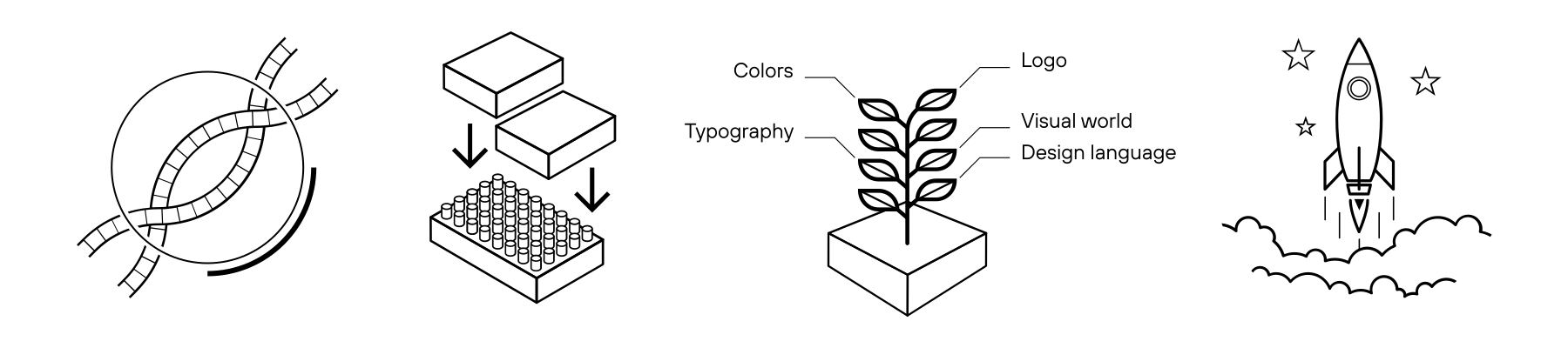
A good logo is simple, clear, and easily recognizable across all media. It has a unique look and credibly reflects your company’s values. Whether large or small, in color or black and white: A strong logo always remains distinctive, understandable, and timeless.
What sets a truly successful logo apart? What are the key details to consider?
Learn more on our page: What Makes a Good Logo?
Applications in branding and brand identity
Why do companies invest time and money in their own logo? A logo is the starting point for brand building. It encapsulates the character and vision of your brand in a symbol that evokes emotions and builds trust.
A good logo works on a technical level and conveys something about the company. It thus allows people to identify with the company’s values and philosophy. A good logo is stylistically and aesthetically unique.
The most important functions of a logo
Amid the visual clutter created by your competitors, a clear logo draws attention to your company. Often, a single glance is enough to understand what your brand stands for. Provided the logo is clear, distinctive, and strategically designed.
The logo is an essential part of a company’s visual identity. It shapes the first impression of a company or brand. A good logo is essential for a professional image. A logo establishes the first connection between a company and its target audience.
Logos attract attention
A logo makes a company, an organization, or a product or service recognizable and memorable. Through consistent and systematic use, it builds trust and fosters a sense of identification among customers, partners, and employees.
Your company will be found quickly and will stick in people’s minds.
Logos convey uniqueness
A logo shapes the first impression of a company. It is a key component of brand identity and leaves a unique impression.
In a competitive market, a distinctive logo sets you apart.
Logos evoke emotions
A successful company logo represents a company’s values, goals, and philosophy. It conveys abstract messages at a glance and visualizes what defines the company. It appeals to the target audience and creates a connection between the company and its target audience.
Logos provide orientation
A well-designed logo provides orientation and clearly sets your brand apart from the competition. A professional logo ensures high brand recognition.
It offers your target audience a clear point of reference and also helps employees identify with the brand.
- Trust & professionalism: A good logo conveys competence and reliability.
- Orientation: It provides your target audience with a clear point of reference and helps employees identify with the brand.
- Conveying a message: The logo is a platform for your brand’s core values.
A well-designed logo contributes to your overall brand design and is often the starting point for a successful corporate identity.
Platform solutions and generic do-it-yourself logos are cheap. A logo that really works comes out of collaboration with experts, and it pays off over many years.
Does your logo meet all the basic requirements? If not, it’s time for a logo redesign.
Our logo design process
From the initial briefing to the finished logo: We work step by step to ensure that you end up with a custom, professional logo. Here’s how your new logo is created:
What does the future hold?
The logo in the digital age: trends and the future
Today, we see logos everywhere: on smartphones, websites, in apps, and on social media. They are often animated or adapt to different sizes.
Especially on websites which are now the most important communication channel for companies the logo must be easy to use without losing its impact and message across different resolutions (on different devices).
In the past, it was very important for colors to look exactly the same in print. Today, that’s less important. That’s because we don’t know what color settings users have on their computers or cell phones. On the other hand, logo animations can be created and optimized for all environments or channels (responsive logos).
When it comes to the future of logo design, scalability and animation are more important than color accuracy and pixel-perfect dimensions.
Good logo design is simple and meets the requirements for scalability, simplicity, and versatility. Today, this is more important than color accuracy or elaborate details.
A professionally designed logo stays the basis of your visual identity, on every channel and at all times.
Frequently asked questions about logos
What is the difference between a logo and a brand?
A logo is a graphic symbol; a brand is the entire experience associated with the company.
Can I design my own logo?
In theory, yes, but without a brand strategy and technical expertise, it usually ends up being arbitrary. Professional guidance is required for a strong brand presence.
How do I find the right type of logo?
That depends on the name, target audience, intended use, and strategy. Consulting with professionals can help you find the best approach.
Conclusion
A logo is the most important visual element of your brand. Choosing a professional approach means investing in brand recognition, trust, and long-term business success.
More insights on this topic:

History of logos
What is the origin of logos? How have they evolved? From ancient symbols to modern digital logos.
Learn more about the history of logos here.

Briefing for brand identity projects
Are you planning a brand identity project but aren’t sure exactly how to get started?
Take advantage of our brand identity briefing.

What is brand identity?
Definition and significance for your brand.
Learn more about brand identity here.
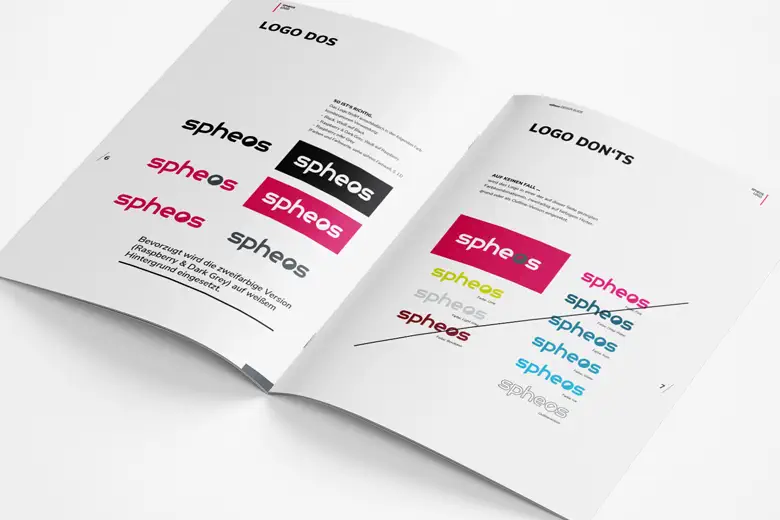
Logo design agency
The logo is the central element of your corporate identity. We’ll design your new logo.
Logo design agency in Munich